
The Montana Behavioral Health Conference
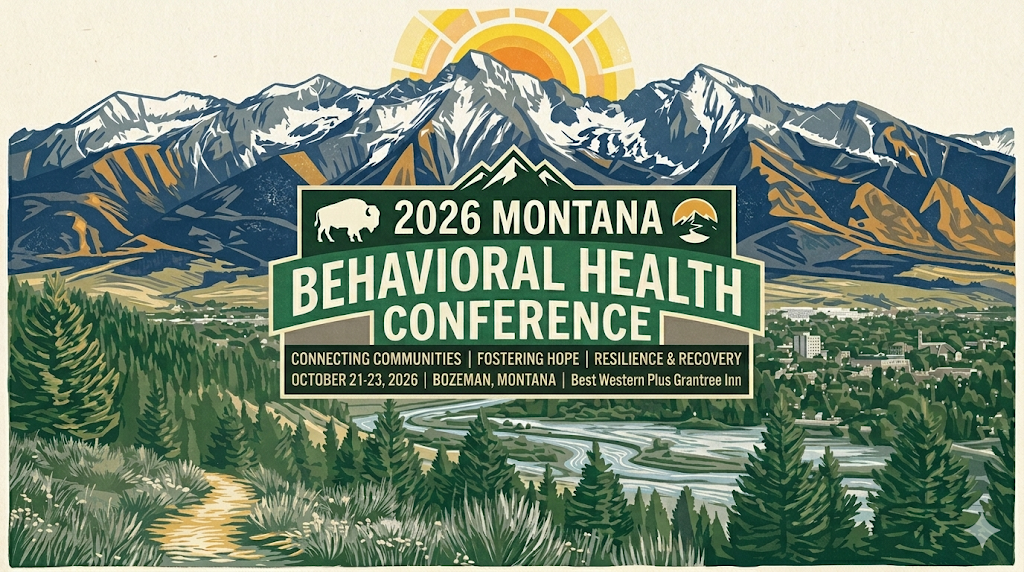
October 21st-23rd - Bozeman Best Western Plus Grantree Inn
Conference Overview
The Montana Behavioral Health Conference is sponsored by the Montana Department of Public Health and Human Services (DPHHS) through the Mental Health Block Grant and hosted by NAMI Montana. The Conference is a statewide convening designed to strengthen Montana’s behavioral health system by bringing together people with lived experience, family members, providers, advocates, researchers, and public health leaders in a shared space for learning, connection, and system improvement.
For years, the Conference has served as an accessible and inspiring educational experience for Montanans living with mental health conditions and their families—providing peer-led stories of recovery, practical education, advocacy tools, and exposure to world-class research and emerging treatment methodologies.
In recent years, the Conference has also grown into a crucial venue where DPHHS can engage in facilitated listening and structured feedback with large numbers of Montanans who experience behavioral health challenges and those who care for them—supporting system evaluation, quality improvement, and policy development.
Mission Statement
The mission of the Montana Behavioral Health Conference is to strengthen Montana’s behavioral health system through accessible, peer-centered education and connection, while creating a trusted statewide forum for honest feedback, collaboration, and shared problem-solving among people with lived experience, families, providers, advocates, researchers, and state partners.
Purpose
The Montana Behavioral Health Conference exists to achieve four interconnected purposes:
1) Accessible Peer-Centered Learning
Create an inclusive, affirming educational experience where people living with behavioral health conditions and families can learn from peers, clinicians, researchers, and advocates—building practical knowledge, hope, and empowerment.
Peer Scholarships Available
Scholarships are limited and reserved for people who have a mental health condition. Click below to download and complete the scholarship application. You can mail the $25 scholarship registration fee to the address listed on the application, or pay online through our donation page here.
2) Inspiration and Recovery Orientation
Center lived experience stories that demonstrate resilience, recovery, and community, reminding participants and the system as a whole that meaningful recovery is possible.
3) System Feedback and Improvement
Provide a structured and facilitated environment where DPHHS and partners can hear from many Montanans—especially those most impacted by serious and disabling mental health conditions—about system strengths, gaps, and priorities for improvement.
4) Collaboration Across Montana’s Behavioral Health System
Serve as a statewide convening for networking and cross-program collaboration among Medicaid Block Grant partners and other behavioral health initiatives (including PATH, community crisis response, maternal mental health, and related programs), improving coordination and shared learning.
Who the Conference Serves
The Conference is designed to serve and connect:
People living with serious mental illness and other mental health conditions
Family members and caregivers
Peer support specialists and recovery community organizations
Providers and clinicians
Behavioral health workforce professionals
Advocates and community leaders
Researchers and academic partners
DPHHS and other government partners
Organizations funded through the Medicaid Block Grant and allied initiatives
Individuals in settings whose voices are often underrepresented, including people in group homes, adult foster care, and other supportive housing arrangements
What Success Looks Like (Outcomes)
The Conference will be considered successful when it consistently produces outcomes such as:
For Participants
Increased knowledge, confidence, and tools to navigate treatment and recovery supports
Stronger connection and reduced isolation
Greater sense of hope and empowerment
Meaningful opportunities to share insights and be heard
For the Behavioral Health System
Clear themes and actionable feedback collected from a broad cross-section of Montanans
Greater trust and communication between community members and state systems
Improved collaboration across programs and organizations
Stronger alignment between policy decisions and lived experience needs
For DPHHS and Medicaid Block Grant–Supported Programs
High attendance and cross-program networking among block grant stakeholders
Structured feedback sessions that inform planning, quality improvement, and reporting
Shared learning across initiatives such as PATH, crisis response, maternal mental health, and other block grant efforts
Commitments for Implementation
To uphold this mission, the Montana Behavioral Health Conference commits to:
Maintaining strong peer and family attendance through scholarships and financial access strategies
Designing sessions that are accessible, trauma-informed, and respectful of diverse needs
Balancing peer-led storytelling, advocacy content, clinical education, and system-improvement dialogue
Providing intentional and facilitated opportunities for DPHHS feedback gathering
Ensuring programmatic diversity so attendees can learn from peers, researchers, clinicians, and advocates
Building a culture where every participant—especially those historically excluded from policy spaces—feels welcomed and valued
Share Your Creativity at the 2026 Lincoln Art Show!
The Lincoln Art Show is returning as part of the 2026 Montana Behavioral Health Conference! Artists are invited to submit up to two pieces of original artwork for display and judging during the conference.
Entries are welcome across a variety of mediums, including painting, drawing, photography, ceramics, mixed media, textiles, jewelry, poetry, music, and more. Artwork may also be listed for sale during the show.
Interested in participating? Download the full Lincoln Art Show packet below for submission requirements, artwork delivery instructions, entry tags, important dates, and the official entry form.
Questions about the art show or entries can be directed to Kim Hayes at 406-465-3066 or kimhayes662@gmail.com. Please include “Lincoln Art Show” in the email subject line.
Entry forms are due by October 18th!