
Bringing Indigenous Education for Mental Health to the Conference Stage: Jade Failing's Story and Dr. Buckles
The 2026 Montana Behavioral Health Conference is next week in Bozeman, October 21–23. The conference will feature a strong lineup of speakers and researchers, and today we want to highlight one in particular: Dr. Adriann Buckles, PhD.
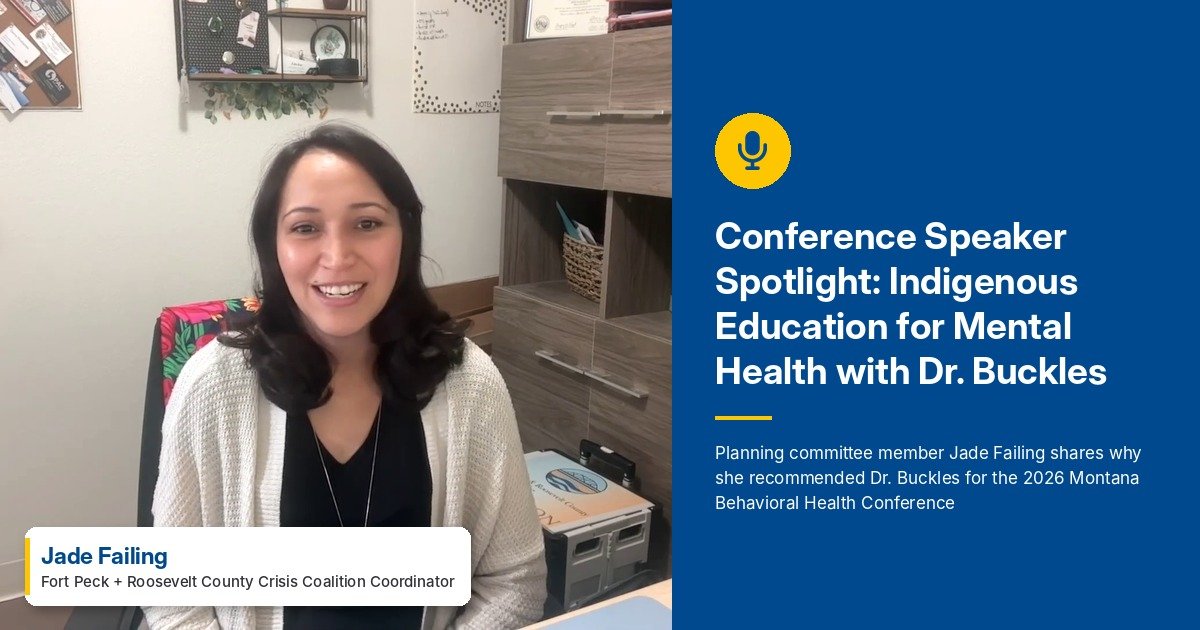
Jade Failing is the Fort Peck + Roosevelt County Crisis Coalition Coordinator and serves on this year's conference planning committee. During a planning meeting, she suggested bringing Indigenous education for mental health to the conference and inviting Dr. Buckles to teach it.
How Dr. Buckles Joined the Conference Lineup
Jade already knew Dr. Buckles from the Fort Peck Reservation. Dr. Buckles is an enrolled member of the Fort Peck Assiniboine and Sioux Tribes, and founded Spotted Hail Woman Consulting. After earning her doctorate, she came back to the community to present at a wellness training on mental health for Indigenous populations.
"It was just a very stirring presentation and really relevant to our area," Jade said.
A month or so later, Jade was in a NAMI Montana conference planning session. The team was asking whether there were other areas the conference should cover.
"That's the amazing thing that I love about NAMI when they're planning their conferences," she said. "They're looking at so many different angles that they want to include, when it comes to behavioral health or mental illness or developmental or recovery or training."
Montana is home to eight tribal nations, and Native communities live in every part of the state. Jade put the idea forward: "Maybe some Indigenous education for mental health would be an awesome addition to the conference."
NAMI Montana's Matt Kuntz and Colleen Rahn were excited about it. They reached out to Dr. Buckles, and the session came together from there.
Why This Presentation Matters
What moved Jade most about Dr. Buckles' presentation was a framework for understanding the social determinants of health in Indigenous communities. It shows how land, culture, and history are woven into each person, along with the socioeconomic pressures Native people have faced in the past and still experience today because of that history.
"I think that's how we're going to really start to create a bridge of compassion and understanding when we're treating or working with Indigenous populations," Jade said. "Until we realize those things, and understand that we don't have a one-size-fits-all model, things won't change."
Dr. Buckles also talked about language and culture as protective factors for Native American people. As Jade recalled from the presentation, when they’re missing, people can lose their sense of identity and purpose, which affects mental health. Her message was also filled with hope: it's never too late. People can still connect with those roots and build them up in themselves and their families, even if they didn't grow up with them.
Jade believes the session has something for everyone in the room. "I felt like it spoke to everybody there: providers, lived experience, people doing peer support with Indigenous populations," she said. "I felt personally moved, and professionally."
How Jade Found NAMI Montana
Jade has been involved with NAMI Montana for a little over a year. She sits on a behavioral health advisory council, where she gives updates on the crisis coalition's work. At one of those meetings, Matt and Colleen invited anyone interested to join the planning calls for the upcoming conference.
"That was the first time I had really heard of it and thought, wow, there's an organization that's centered around mental illness," she said. "I was just really excited that there was an organization doing the things that they were doing."
The words "mental illness" and "alliance" stood out to her. Jade appreciated NAMI Montana's broad approach, which encouraged her to consider mental illness alongside developmental disabilities and co-occurring conditions in her own work.
"It really does provide that bigger umbrella that I wanted to make sure I started really encompassing with my work," she said.
Bringing Compassion to Crisis Response
Jade's work starts with her community. She saw a gap in her rural, frontier, tribal community: crisis response wasn't connected to mental health care, substance use treatment, and the right assessment. Closing that gap is what drives her.
That connection, she said, is how communities can break the cycles "that keep people stuck in these cycles of jail and ER and substance use."
She has also seen what happens when crisis responders keep meeting the same people over and over. "That compassion kind of gets lost, that understanding of that individual," she said.
Education is how she hopes to bring that compassion back. "If we can help bring that little bit of education and awareness, I think that we'll have a more effective crisis response system that also provides people with care that they feel good about."
More Than Meetings
Jade recently heard NAMI Montana Executive Director Matt Kuntz speak at another conference. He highlighted legislative and advocacy efforts that NAMI Montana has contributed to over the years.
"I was just like, what? These are monumental things for our state and for our people and our communities," she said. "Sometimes you hear about an organization, and you're like, okay, they meet, and they talk about mental illness. But these were real, tangible things affecting people's lives."
She thinks that side of NAMI Montana's work deserves more attention. "They're not just a group of people gathering together and kind of meeting and talking about things. They're doing some really amazing things with their advocacy and with legislation."
Join Us in Bozeman October 21–23
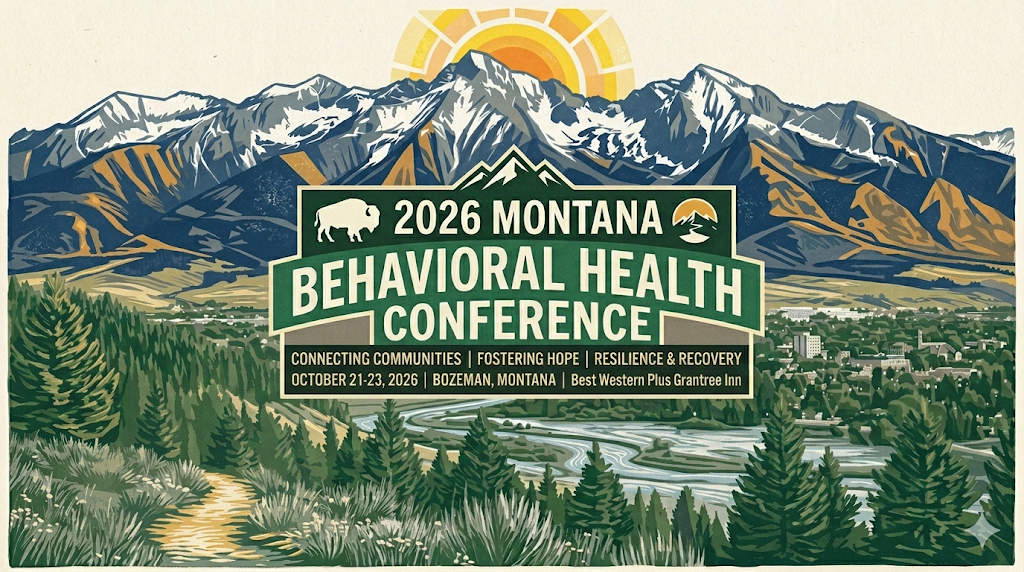
It’s not too late to join us for the 2026 Montana Behavioral Health Conference on October 21–23 at the Best Western Plus GranTree Inn in Bozeman. It brings together providers, researchers like Dr. Buckles, advocates, peer supporters, and people with lived experience.
Last year was Jade's first time at the conference. "I was just a sponge at every single breakout session, every single presentation," she said.
What stood out to her was how many angles the conference covered, including some she hadn't thought about. "Even if it wasn't relevant to my professional field, I left with something from each session."